
Compounded GLP-1 Weight Loss Programs in Los Angeles: Semaglutide and Tirzepatide
Los Angeles weight loss peptides clinic
Interest in weight loss peptides and GLP-1 peptides has grown among adults considering medical support for weight management. Semaglutide and tirzepatide are prescription medications that act on pathways involved in appetite and blood-sugar regulation. Their use requires an individual medical evaluation, not just a product selection.
This guide explains the difference between FDA-approved medications and compounded versions, what medical supervision can involve, and questions to discuss with a licensed clinician. It is educational, not a recommendation or a substitute for personal medical advice.
FDA-approved medications and compounded versions are not the same
FDA-approved brand-name products containing semaglutide or tirzepatide have undergone FDA review for specific indications. Depending on the product, these include type 2 diabetes or chronic weight management for eligible patients. The product, formulation, indication, and prescribing information matter.
Compounded semaglutide and compounded tirzepatide are not FDA-approved products. The FDA does not review compounded medications for safety, effectiveness, and quality before they are marketed. Compounding may be appropriate for an individual patient when a prescriber determines that the patient’s medical need cannot be met by an FDA-approved medication and applicable legal requirements are met. It should not be treated as a routine substitute or a guaranteed lower-cost copy of a brand-name drug.
As of October 2026, shortage status should not be assumed to justify routine compounding of copies. The prescribing clinician and dispensing pharmacy must assess the patient-specific need and current federal and state requirements. For background, see the FDA’s information on unapproved GLP-1 drugs and its overview of drug compounding.
What to know about compounded formulations
Some programs may discuss compounded semaglutide with B12 or B6, or compounded tirzepatide with B12 or B6. These combinations remain compounded, physician-prescribed therapies, not FDA-approved combinations. Adding a vitamin does not make a compounded medication FDA-approved or establish that the added ingredient provides a weight-management benefit. A clinician should consider whether an added ingredient is appropriate for the individual patient.
Some listings also use terms such as “microdose,” “oral,” or “sublingual.” These terms do not establish an FDA-approved indication, a validated treatment plan, or equivalence to an FDA-approved product. The FDA-approved oral semaglutide product has a specific formulation and indication; a compounded oral or sublingual product should not be assumed to work the same way. Tirzepatide does not have an FDA-approved oral product. Any formulation must be reviewed by a licensed prescriber and dispensed by an appropriately licensed pharmacy, where legally permitted.

Medical evaluation and monitoring
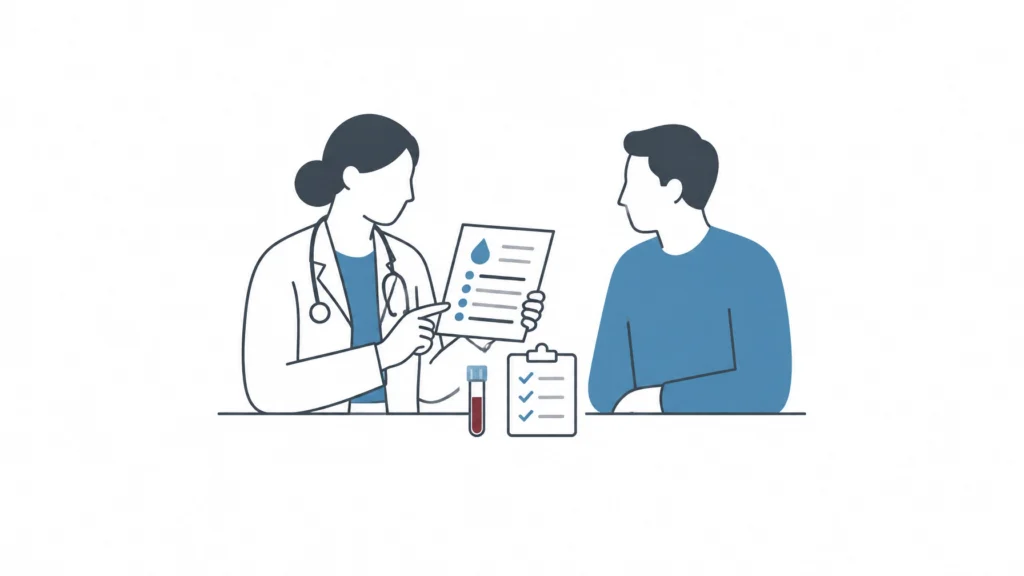
Before considering medication, discuss your health history, current prescriptions and supplements, prior weight-management efforts, and personal goals with a licensed clinician. Your clinician can review factors such as metabolic health, relevant medical conditions, and whether an FDA-approved treatment may meet your needs. Lab testing may be appropriate based on your history and the clinician’s judgment; it is not a substitute for a full evaluation.
If you use HRT or TRT, share that information with the prescribing clinician. Hormone therapy and weight-management decisions should be considered in the context of your overall health and other medications. Avoid changing or combining therapies without clinical guidance.
If a compounded medication is prescribed, ask the prescriber and dispensing pharmacy to explain the exact product, its ingredients, storage requirements, how to use it safely, and who to contact with questions. Do not calculate, change, or escalate a dose on your own. Follow the instructions provided for your specific prescription.
The FDA has reported dosing errors with compounded injectable semaglutide, including errors related to measuring medicine from multi-dose vials. Reports involving compounded semaglutide and tirzepatide have included gastrointestinal symptoms and, in some cases, serious events. The FDA notes that adverse-event reports may be undercounted and do not by themselves establish that a medication caused an event. It also warns about products with incorrect labeling, inadequate refrigeration during shipping, and semaglutide salt forms such as semaglutide sodium or acetate, which are different active ingredients from those used in FDA-approved products. Read the FDA’s safety information on unapproved GLP-1 drugs and its alert about dosing errors with compounded injectable semaglutide.
Seek prompt medical guidance if you have severe or persistent symptoms, or if a medication arrives warm, damaged, or without clear pharmacy labeling and instructions. Do not use a product labeled “for research purposes” or “not for human consumption.” Research chemicals sold online are not a substitute for prescribed medication and medical supervision.
Choosing a pharmacy and care pathway
A pharmacy’s license and the prescriber’s role are important parts of a safe process, but neither means a compounded medication has been FDA-approved. Section 503A pharmacies and 503B outsourcing facilities operate under different legal frameworks. Compounded drugs from either type are not FDA-approved products. A pharmacy’s status does not remove the need for an individual prescription, appropriate clinical oversight, and clear product information.
Avoid sellers that offer prescription medications without a licensed clinician’s screening, claim that a compounded product is identical to an FDA-approved drug, or sell products marked for research use. The FDA recommends obtaining a prescription from a doctor and using a state-licensed pharmacy. You can review the FDA’s BeSafeRx online pharmacy guidance.
Fit medication into a broader health plan
Medication decisions are only one part of metabolic health. Discuss nutrition, sleep, resistance exercise, cardiovascular activity, and follow-up with your care team. If you work with a personal trainer, gym coach, or physical therapist, coordinate changes in activity with your clinician, especially if you experience side effects or changes in energy, hydration, or food intake.
For adults exploring weight loss peptides in Los Angeles, clinical care may be relevant across Beverly Hills, Venice Beach, Hollywood, Encino, Calabasas, Downtown Los Angeles, Brentwood, Manhattan Beach, Culver City, Studio City, Santa Monica, Malibu, Pacific Palisades, the San Fernando Valley, Burbank, and Pasadena. The local setting does not change the need for an individualized medical evaluation or the FDA status of a medication.

Los Angeles Peptides Clinic services
Los Angeles Peptides Clinic describes its services as doctor-prescribed programs for weight loss GLP care, performance and repair therapy, longevity and anti-aging, wellness, and HRT and TRT. The clinic’s stated process includes secure online intake, blood work through Los Angeles diagnostics hubs and local labs, California board-certified clinicians, and care included with program pricing. It also states that its portal is HIPAA-compliant, that programs may be HSA/FSA eligible depending on plan rules, and that free discreet two-day shipping is available after pharmacy fulfillment. Prescriptions are sourced from U.S.-licensed 503A or 503B pharmacies. Eligibility, availability, pharmacy fulfillment, shipping, and coverage depend on individual circumstances. See the Los Angeles weight-loss program information or how the process works.

Key points
- Compounded semaglutide and tirzepatide are not FDA-approved products and are not automatically interchangeable with FDA-approved medications.
- Compounding should be considered only when a prescriber determines an individual medical need and applicable legal requirements are met.
- “Microdose,” oral, sublingual, B12, and B6 labels do not change a product’s FDA status or establish equivalence to an approved product.
- Use a licensed prescriber and appropriately licensed pharmacy. Do not use research chemicals or adjust medication without clinical direction.
- Ask about the exact formulation, pharmacy, storage, monitoring, and who to contact if questions or symptoms arise.
Contact
Los Angeles Peptides Clinic
1575 Westwood Blvd., Ste 302, Los Angeles, CA 90024
https://losangelespeptidesclinic.com
info@losangelespeptidesclinic.com
Phone: (310) 945-2696
Educational disclaimer: This article is for general educational purposes only and is not medical advice, diagnosis, or treatment. Peptide therapies and compounded medications are not FDA-approved to treat, cure, or prevent any disease. Compounded GLP-1 medications are not FDA-approved as compounded products and have not been reviewed by FDA for safety, effectiveness, or quality before marketing. Discuss any medication with a qualified clinician who can evaluate your individual circumstances.